0086 574 87739122


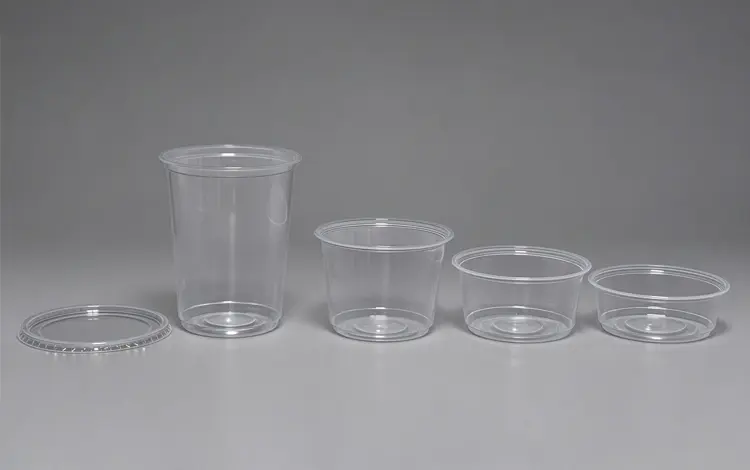 Автор: Итан
Field Guide — Packaging & Food Service
Microwavable Disposable Bowls: What Holds Up Under Heat — and What Doesn’t
For caterers, meal-prep kitchens, and takeaway brands, “microwavable” is not a single feature. It is a chain of material decisions that runs from the resin to the rim — and getting it right determines how safely and evenly food reheats.
A genuinely microwavable bowl is defined by its polymer, not by a marketing line. Heat resistance comes from the base resin, the wall thickness, the rim geometry, and the food-contact additives used during production. The “microwave safe” marking simply confirms that those variables have been engineered for heat — and that confirmation is only as strong as the supplier behind it.
Two polymer families do most of the heavy lifting. Polypropylene (PP) keeps its shape through ordinary reheating cycles and covers most catering and takeaway bowls. Crystallized PET (CPET) is formulated for higher heat, which is why ready-meal trays and ovenable bowls lean on it. Coated paper sits in the middle: the paper fibers handle warmth, but the lining material — polyethylene, wax, or PLA — sets the real limit.
The difference appears at the rim, the lid seal, and the base seam. A bowl that feels sturdy at room temperature can soften in under two minutes when oil-rich food pushes local temperatures past the material’s heat tolerance. That is why the relationship between how a bowl handles heat and the design behind it gets so much attention from operators who reheat in real volume.
For bulk buyers, the fastest filter is the resin type. Each material family has a practical temperature ceiling, and knowing it prevents most of the reheating failures seen in commercial kitchens.
| Material | Practical heat limit | Microwave reheat | Typical bowl formats | Main caution |
|---|---|---|---|---|
| CPET | 200 °C and above | Excellent; multiple cycles | Ready-meal trays, ovenable bowls | Check food-contact certification per batch |
| Polypropylene (PP) | 110–130 °C | Very good; short to medium cycles | Catering bowls, takeaway noodle bowls | Thin rims may soften at high power |
| Coated paper | Around 100 °C | Moderate; short bursts only | Soup and takeaway bowls | PE lining is safer than wax or unlined board |
| PLA (compostable) | Around 60 °C | Not recommended | Cold deli bowls, salad containers | Deforms and leaks above its softening point |
| Polystyrene foam | 75–90 °C | Avoid | Foam clamshells, low-cost cups | Not intended for hot food or reheating |
CPET deserves particular attention from commercial buyers.
 CPET Tray for Ready-Meal Packaging from Ningbo LinhuaThis CPET tray withstands chiller-to-microwave transitions, making it a reliable choice for commercial meal programs that require batch reheating and dependable structure.View Product →
A CPET tray keeps its structure when food moves from a chiller or freezer straight into a microwave cycle, which makes it a dependable base for delivery meals, canteen programs, and prepared-meal lines that reheat in batches.
PP bowls cover the everyday range — reheated soups, noodle dishes, rice bowls, and leftovers. They do not claim the high-temperature headroom of CPET, but they hold up well at moderate power and a lower per-unit cost.
Ask the supplier how the limit was verified. A tolerance margin of 20 °C to 30 °C above your reheating temperature is a reasonable safety buffer; the thinner the rim, the smaller that margin becomes.
The bowl does not have to catch fire to fail. It can soften at the rim, leak from a sealed seam, or transfer heat unevenly until the person holding it gets burned.
Oil changes the physics of reheating. Fats and sugars reach higher local temperatures than water-based dishes, so a bowl approved for broth can fail dramatically with a beef stew at the same power level. The polymer softens from the inside, the rim curls, and an apparently safe container becomes a spill hazard.
Even a correctly specified bowl can fail in practice: lids sealed too tightly, stacked bowls heated as one block, or a bowl reused beyond the number of cycles it was validated for. These failures are predictable, which makes them preventable.
The safest procedure is also the most practical one: short cycles, moderate power, and a brief stand-time before serving. Commercial microwave ovens run hotter than household units, so reduce the cycle length accordingly.
The procedure describes what the bowl can handle; the food side needs its own rules.
Retail shoppers can test a bowl by feel. Commercial buyers have something better: they can ask for evidence. Before a large order, request material specification sheets, food-contact compliance documentation, and temperature test reports. Confirm that the manufacturer runs recognized systems such as ISO 9001, BRC packaging standards, or HACCP-based food safety management — those systems are what make batch consistency possible. When the order involves food-contact packaging, ask how those systems translate to the production line: GMP-style hygiene controls, raw material traceability, and finished-goods inspections.
Design details affect daily performance as much as the resin does. Rims that stay cool to the touch, sidewalls deep enough to contain splashes, and clean stacking geometry reduce complaints from staff and customers.
For dips, sauces, compotes, and desserts, a smaller bowl format keeps portion cost in line while using the same PP material family across the rest of the program.
A 5 oz PP bowl with a 110–130 °C tolerance covers hot side sauces and cold desserts alike, which is why it appears so often on catering price lists.
For hot meal deliveries and frozen-to-microwave lines, an EVOH barrier layer adds oxygen protection that keeps food fresh before reheating, while the tray structure handles the heat transition afterward.
 MAP Barrier Bowl for Extended Freshness in Meal LinesThe EVOH barrier layer preserves freshness before heating, while the sturdy bowl handles heat transitions, ideal for ready-meal programs with longer chilled shelf life.View Product →
Barrier freshness before heat, structural stability during it — this combination explains why EVOH bowls appear in ready-meal programs that need longer chilled shelf life.
Finally, consider the source. A manufacturer with in-house mold development and material selection can adjust wall thickness, rim profile, or resin to match your reheating workflow, instead of asking you to adjust the menu to the bowl.
A microwavable disposable bowl is the sum of several decisions: the resin, the wall thickness, the lid, the food inside it, and the power of the microwave. Buyers who start with those variables — rather than with the look of a container — end up with fewer leaks, fewer returns, and less wasted food.
Choose for the heat first: resin, heat rating, lid behavior, and the dish on your menu. A bowl that passes all four will keep serving long after cheaper alternatives have gone soft at the rim.
PET Sheet Plastic: A Practical Guide to Sourcing, Gauges and Food-Safe Trays A production manager a...
Field Guide — Packaging & Food Service Microwavable Disposable Bowls: What Holds Up Under Heat ...

0086 574 87739122
Copyright © Ningbo Linhua Plastic Co.,Ltd. All Rights Reserved.


Опубликовать комментарий